
Recorded on: Oct 22, 2025
Description
For centuries, modern science has relied on the scientific method to better understand the world around us. While helpful in many contexts, the scientific method is also objective, controlled, and reductionist – often breaking down complex systems into smaller parts for analysis and isolating subjects to test hypotheses. In contrast, indigenous wisdom is deeply contextual, rooted in lived experience, and emphasizes a reciprocal, integrated relationship with the rest of the natural world, viewing all parts of the system as interconnected. What becomes possible when we combine the strengths of each of these knowledge systems as we navigate humanity’s biggest challenges?
In this episode, Nate is joined by Rosa Vásquez Espinoza, a Peruvian chemical biologist with Andean-Amazonian indigenous roots, to discuss how she is actively merging modern science and indigenous knowledge through innovative research in the Amazon Rainforest. Rosa explains how the integration of these two ways of knowing unveil more effective paths forward for conservation and ecological wisdom that simultaneously offer economic opportunity for the people who live there. She also shares her biggest successes to date bringing this vision to life, including documenting and protecting Earth’s oldest known bee, the stingless bee.
Were the indigenous people of ancient cultures the original scientists? How can modern science learn from indigenous knowledge – and vice versa? And, rather than siloing ourselves into one ‘right’ way of seeing the world, what types of insights become possible when we learn to embrace the validity and importance of multiple ways of learning and knowing?
About Rosa Vásquez Espinoza
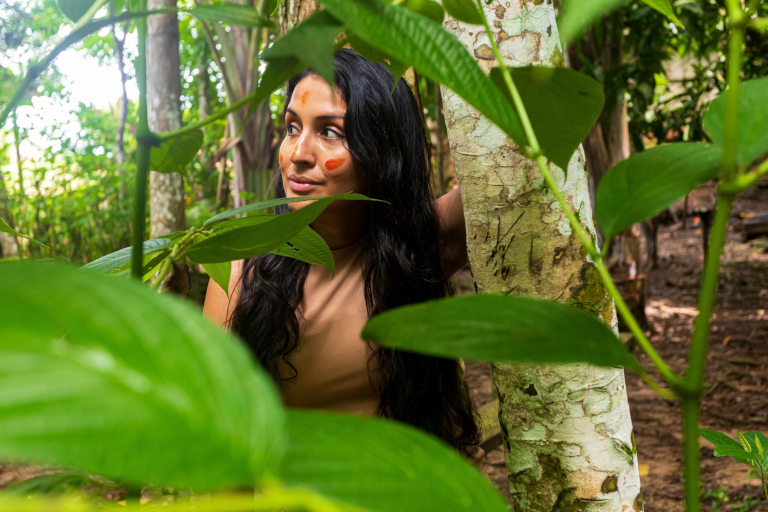
Dr. Rosa Vásquez Espinoza is a Peruvian chemical biologist, National Geographic Explorer, and award-winning artist whose work bridges indigenous knowledge and modern science to protect the Amazon Rainforest and its communities. With Andean-Amazonian indigenous roots, she is the founder of Amazon Research Internacional, where she has pioneered groundbreaking research on extreme Amazonian ecosystems and biodiversity, while advocating for policies that recognize the intrinsic value of nature.
Rosa was the first microbial explorer of the Amazonian Boiling River, led the first chemical analysis of stingless bees and their medicinal honey in Peru, and contributed to scientific advancements that supported Peru’s Law 32235, granting legal protection to stingless bees for the first time. Her work as an International Ambassador for the Ashaninka people further highlights her commitment to conservation and indigenous advocacy. She also co-authored the first scientific paper with Ashaninka leaders, blending traditional wisdom with modern science to safeguard the rainforest.
Rosa’s passion for exploration and conservation is reflected in her new book, The Spirit of the Rainforest: How Indigenous Wisdom and Scientific Curiosity Reconnects Us to the Natural World, which is available now.
Show Notes & Links to Learn More
The TGS team puts together these brief references and show notes for the learning and convenience of our listeners. However, most of the points made in episodes hold more nuance than one link can address, and we encourage you to dig deeper into any of these topics and come to your own informed conclusions.
00:00 – Rosa Vásquez Espinoza, Works, Amazon Research Internacional, National Geographic Explorer (about the program)
- The Spirit of the Rainforest by Rosa Vásquez Espinoza
- Scientific paper authored with indigenous Ashaninka communities in Peru
- Photos/Videos from Rosa’s Work:
- Photos: Rosa Childhood, Stingless Bees, Other Wildlife, Final Montage
- Trap Cam Footage: Andean Bear, Tapir, Armadillo, Jaguar, Puma, Wild Hogs
04:13 – Agricultural evidence from 10,000 years ago in deep Andes and Amazon, Controlled burning in Amazon dates back thousands of years
05:23 – Genetic testing of cacao finds that it was selectively bred thousands of years ago
06:30 – Scientific method
07:40 – How the start of the Holocene brought about mass agriculture
08:25 – Astronomy in the Mayan and Incan times
08:34 – Discovery of water systems in early Amazonian societies
10:20 – Shamanism
11:30 – Plant medicine, Ethical wildcrafting
13:50 – Western vs. Indigenous systems of knowledge
15:25 – Less than 1% of plants in the Amazon have been explored chemically for medicinal purposes
17:00 – Percentage of pharmaceuticals based on plants, 70% of all new drugs introduced in the United States in the past 25 years have been derived from natural products
17:50 – Brief history of humans and the tobacco plant, Deep history of tobacco in lowland South America
20:54 – Use of wild tobacco in the Amazon Rainforest, Cigarette butts as mosquito oviposition, deterrent, Smoke as a mosquito repellent
26:20 – Southern peninsula of India to become unlivable in the next 50 years
27:50 – Impacts of climate warming on freshwater fish, Animals are generally migrating poleward and to higher altitudes, TGS Episode with Joe Roman, TGS Episode with Malin Pinsky
28:04 – Pollution and Dryness in the Amazon and Andes
30:40 – Mapping stingless bees in the Amazon
31:20 – Range of Andean bears’ habitat
32:35 – Artemisinin malaria medication, Tu Youyou 2015 Nobel Prize for Medicine, Traditional Chinese Medicine
34:10 – Pharmaceutical potential in coral reefs
34:54 – Medicines based on Amazonian plants
35:19 – Rights of Nature movement
35:23 – The Golden Age of Natural Medicine in the 1970s
38:09 – How the Industrial Revolution shaped education
41:06 – Some stingless bee subfamilies are as old as dinosaurs
41:40 – Oldest known bee fossil is a stingless bee, Where stingless bees are found
42:15 – Use of stingless bee honey as a ceremonial gift
43:25 – Stingless bees endangered status and conservation methods
43:45 – Stingless bee honey proposed to reduce severity of COVID-19 infections, Physiochemical and chemical characteristics of honey from two species of stingless bee
45:00 – Updates on Rosa’s work mapping stingless bees, Bee-friendly reforestation
45:55 – Bees in mythology
46:05 – Stingless bees’ role in pollination
47:11 – Peru’s Satipo province passed a local law recognized the rights of stingless bees
49:30 – Ashaninka usage of camera traps for wildlife monitoring, About the use of camera traps in the Amazon (Bolivia example)
53:56 – TGS Episode with André Guimarães
54:45 – Importance of empowering local communities in Amazonian conservation efforts
56:30 – Stingless bee economy in the Amazon
58:45 – Classic honeybees travel much farther than stingless bees
59:13 – Chopping down the Amazon for livestock feed
59:58 – Stingless bees help increase native crop yield
1:01:04 – Amazon Research Internacional work in Bolivia
1:05:40 – Amazon river dolphin (pink dolphin)
1:06:25 – Paiche fish
1:06:56 – Killer caterpillar
1:07:40 – ***Blowfish organs are poisonous and must be prepared specifically
1:08:40 – Biofluorescent species in the Amazon, Rainforest floor is quite dark
1:11:15 – Dealing with eco-anxiety
1:12:10 – Struggling to find clean water and fish in Amazon
1:13:40 – Zoopharmacognosy, Elephants using treebark to induce labor, Chimps using leaves to heal skin and teaching one another
1:14:56 – Ayahuasca
1:17:20 – Smell of soil after rain, Alters brain chemistry
1:17:50 – Trees can communicate with one another between mycelium
1:18:15 – Dogs can smell human emotions