
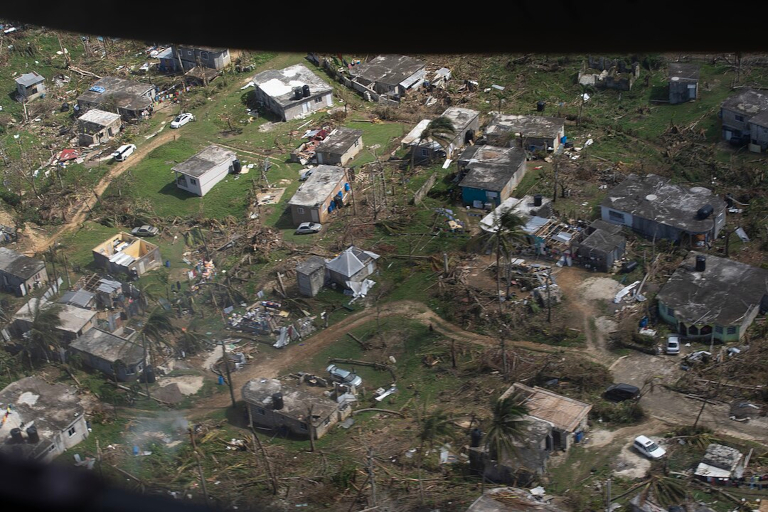
As deadly storms rip through the Caribbean, a new United Nations report has delivered a grim reality check: the world is failing to prepare for the climate it has already created.
UNEP’s Adaptation Gap Report 2025, aptly titled Running on Empty, warns that developing countries will need between US$310 and 365 billion annually by 2035 to adapt to intensifying climate impacts. Yet international public finance for adaptation fell to just US$26 billion in 2023, down from US$28 billion the previous year. In other words, current flows cover barely one-twelfth of what is needed.
This widening adaptation gap is not an abstract accounting problem. It is visible in the wreckage of homes, farms, and economies. It is the difference between being able to rebuild and being left behind.
Last week, Hurricane Melissa, the strongest-ever storm to hit Jamaica’s shores, tore through the Caribbean, leaving destruction equivalent to nearly 30% of the island’s GDP. With at least 75 people dead across the region and damages exceeding US$50 billion, Melissa is not just another natural disaster; it is a case study in the cost of global inaction.
A rapid attribution study found that climate change made Melissa four times more likely and increased its wind speeds by 7%, which in turn raised damages by around 12%. For small island developing states (SIDS) like Jamaica and Haiti, these figures are not just statistics. They represent the loss of livelihoods, tourism revenues, and critical infrastructure. They expose how countries that contributed least to global warming are being forced to pay the highest price.
The tragedy unfolding in the Caribbean mirrors the devastation Pakistan has faced yet again this year. The 2025 monsoon floods have affected nearly seven million people, killing over a thousand and displacing hundreds of thousands more.
For both Pakistan and SIDS, adaptation is the need of the hour. It means building stronger flood defenses, climate-smart agriculture, resilient infrastructure, and safety nets that protect the poorest. Strong evidence shows that taking early action by investing in resilient infrastructure and social protection programmes is far more cost-effective than reactive, post-disaster responses.
According to research by the International Institute for Environment and Development (IIED), every US$1 invested early can yield up to US$5.17 in development gains and avoided losses. Yet the world continues to spend far more on cleaning up after disasters than on preventing them in the first place.
This failure of foresight is not just wasteful; it is self-defeating. Each dollar delayed multiplies the human and economic toll. As the IIED’s findings underscore, proactive investment in resilience pays for itself many times over. Yet adaptation remains the most chronically underfunded part of the global climate response.
At COP29 in Baku last year, the world’s governments agreed to the Baku to Belém Roadmap, pledging to scale up climate finance to US$1.3 trillion by 2035. Within this, developed countries committed to mobilize at least US$300 billion per year for developing nations. On paper, it looks ambitious. In reality, it is nowhere near enough. Adjusted for inflation, adaptation needs could reach US$440–520 billion per year by 2035, and the US$300 billion target covers both mitigation and adaptation, with no separate adaptation goal in sight.
The Adaptation Gap Report makes clear that international public finance alone cannot close the gap, but that does not mean the burden should fall on the poorest. The private sector has a role to play, potentially US$50 billion a year, but that will require targeted policy action and blended finance tools to de-risk investments. In other words, concessional and grant-based finance must remain at the heart of the response.
But at a time when solidarity is most needed, the political will to act seems to be weakening. The United States’ withdrawal from the Paris Agreement has dealt a serious blow to trust and ambition in global climate cooperation. For vulnerable countries, it signals not only indifference but abandonment, a betrayal of the promise that those most responsible for emissions would help those most exposed to their consequences.
The Baku to Belém Roadmap must therefore go beyond pledges and rhetoric. It must ensure that adaptation finance is fair, accessible, and non-debt-creating, prioritizing grants, concessional instruments, and innovative mechanisms that do not deepen vulnerability or inequality.
Hurricane Melissa and Pakistan’s floods are not isolated tragedies. They are warnings of what a “business-as-usual” world looks like, one running on empty promises. Without urgent and equitable action to fund adaptation, the next decade will not only test our infrastructure; it will test our humanity.
Adaptation is not charity; it is climate justice. And justice delayed will only deepen the loss.