
Imagine a real-world prototype of what life could look like beyond competition: a place where we can practice the kind of future we say we want…
The African Peace Village in Portugal is designed to do just that. A land-based, refugee-led ecovillage blending ancestral African wisdom and European approaches, the project was conceived by Post Growth Fellow, Joshua Konkankoh, a Cameroonian elder and community organizer now living in exile in Portugal.
The emerging initiative builds on decades of work reviving Indigenous systems of cooperation and ecological care that Konkankoh developed at his award-winning Permaculture community, Bafut Ecovillage in Cameroon. When the ecovillage was destroyed during the country’s ongoing conflict, its spirit lived on through Konkankoh’s enduring vision and stewardship as he began co-creating an African Peace Village in Portugal’s western Algarve.
The African Peace Village is envisioned as a place to host gatherings, workshops, and retreats — where people come to recover their sense of belonging, exchange knowledge on food consciousness, mental health and experiment with new economic and educational paradigms. Once developed, the blueprint could be replicated and adapted to local contexts across the world.
“The way out is in”
Across Europe, responses to migration have focused on control and often veer into violence. This can be seen in the development of ever-more hostile rhetoric and policies, and continued human rights violations at the borders. Immigrants and refugees tend to be treated either as vulnerable groups in need of help or problems to be solved. Yet, as people displaced by conflict, climate breakdown, and economic collapse, they harbor a wealth of wisdom about how to adapt, rebuild, and care for one another in the face of crisis. “We are not only people seeking refuge; we are carriers of knowledge,” says Konkankoh. “I want to show that refugees are not a burden, but teachers of resilience.”
At the same time, our dominant digital, economic, and educational systems extract value without giving much back. They are, as Konkankoh puts it, “A world of channels that exclude life, where money and information flow, but love and wisdom do not.” Under the banner of progress, these systems have depleted not only our ecosystems but also our sense of meaning.
The result is disconnection. We’ve lost touch with the mysteries and wonders of the living world and the knowledge of those who still listen to and understand from the more than human world. What’s needed now are new pathways of exchange where knowledge, experiences, stories, and care can move freely across borders. “The way out is in,” Konkankoh says, “when we restore the channels that let life move both ways: between North and South, between people and planet.”
An African Peace Village in Europe: The vision
Currently in the early stages of development, the project in Portugal seeks support and facilitators to integrate Indigenous wisdom and modern science, serving as both a physical and digital hub for displaced people, host communities, young entrepreneurs, artists, researchers, and regenerative pollinators exploring new ways of working and living together.
Recognizing that today’s ‘polycrisis’ is also a crisis of connection, the idea is to co-create bridges — between generations, between digital and ecological spaces, and between the worlds of policy and lived experience.
The vision is already beginning to take shape. Located in Burgau in Portugal’s western Algarve, the site is dotted with a few existing buildings in ruins across a vast but depleted landscape that calls for regeneration. The plan is to develop permaculture zones, eco-hosting love spaces, and communal spaces designed for education, art, and healing.
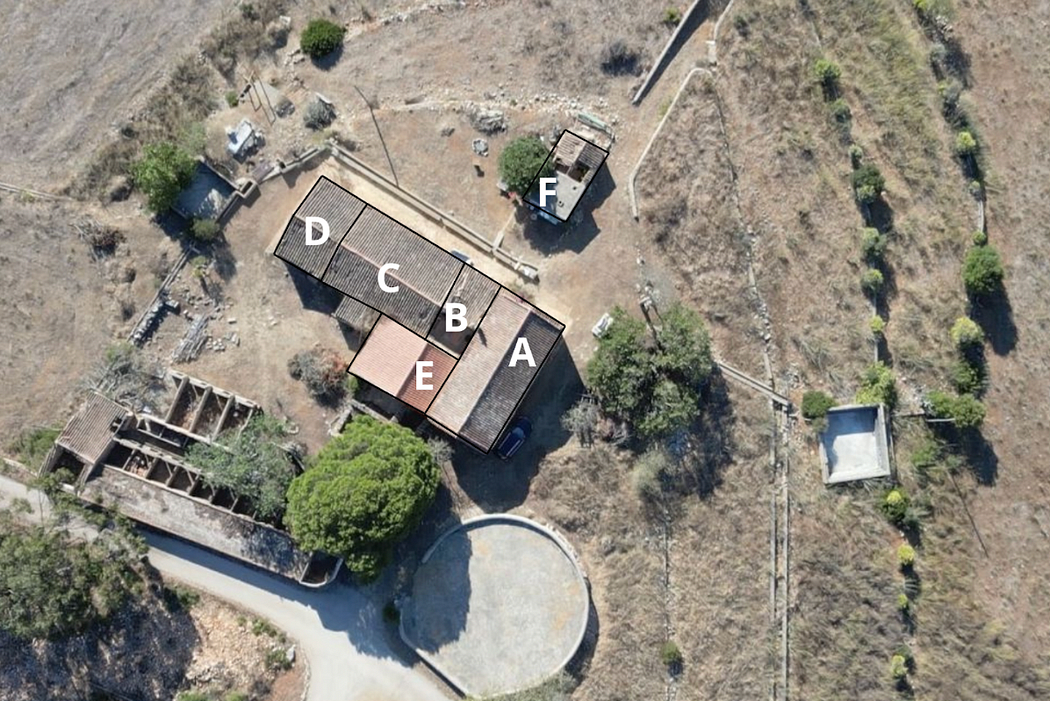
The current site planned for regeneration.
At its core is The Spirit of Ndanifor Ubuntu Spirit from Bafut that emphasis the belief that we exist through one another. This ethos shapes a community of practice anchored in permaculture, holistic design, and harmony with the more-than-human world. It’s about creating channels that nurture life, such as social enterprises, herbal cooperatives, agroecology projects, and gift economies that keep value within the community and ecosystem.
Relational work at the Village will incorporate approaches that strengthen trust and belonging, such as land-based/project-based learning, rites of passage, and regenerative forms of governance inspired by Indigenous African traditions.
Through action research and community–university partnerships, the project invites students and scholars to learn alongside refugees and residents, exploring how collective intelligence and technology can support post-capitalist, life-affirming systems.
Decades of ecological and relational leadership
Konkankoh’s worldview was shaped by a childhood in pre-money Ambazonia, immersed in what he calls “the economy of love, ”a system built on solidarity and reciprocity. “We had no use for money,” he remembers. “Food was the wealth of the people… people took care of those in need before themselves and their own families.” Those early experiences formed the foundation for everything that followed: a lifelong commitment to restoring the values of community and mutual support that colonialism and capitalism have eroded.
Yet for Konkankoh, decolonization is less a political framework and more a lived process of reconnection. “This is a friendship space, almost a prayer,” he explains. “It’s about healing the relationships between North and South, between humans and the land, and within ourselves.”
From those beginnings grew decades of ecological leadership. Konkankoh founded the Ndanifor Permaculture Ecovillage in Cameroon as a living model of Indigenous governance and sustainable living. The word Ndanifor embodies the idea that all renewal begins with healthy relationships. To “live in the Spirit of Ndanifor” is to learn together through doing and being, and to recognize that wisdom is co-created through community rather than owned by individuals.
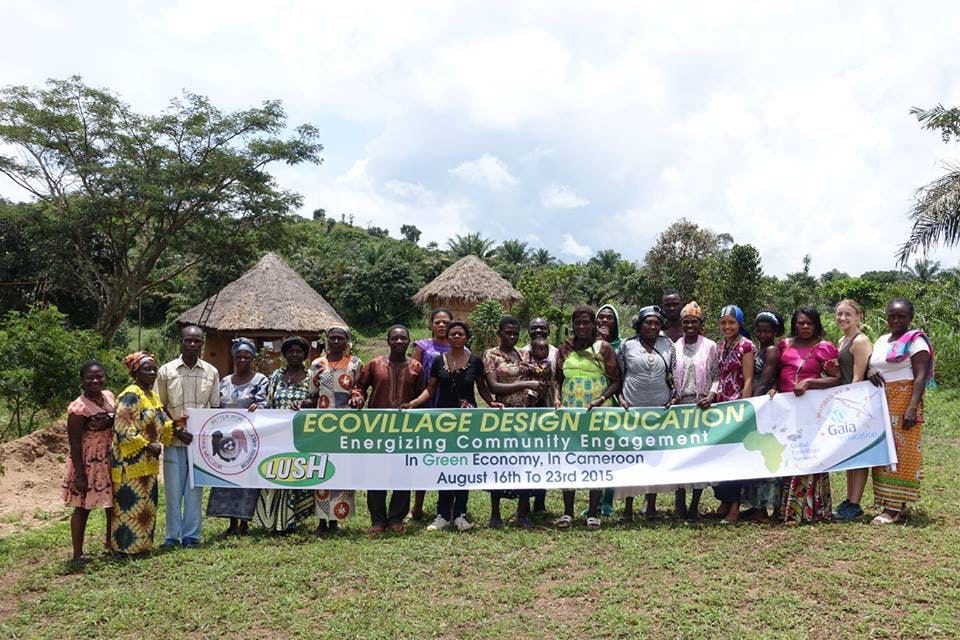
Bafut Ecovillage in Cameroon.
As an ambassador for GEN Africa and representative for the Regenerators, Konkankoh helped develop ecovillage curricula for youth networks across the continent, supporting communities to design locally rooted, self-sustaining systems. His collaborations with initiatives like the UNDP Conscious Food Systems Alliance and the UNFCCC, Intentional Peer Support for African Refugees and now Post Growth Institute Fellow has extended that vision globally, connecting Indigenous wisdom with regenerative development and climate action.

Konkankoh speaking at a GEN event.
Since arriving in Europe in 2016, Konkankoh has been building bridges at the local level, working with groups like the Regenerators and the ERCommunity Barlavento Local Food/Climate Alliance , and partnering with municipalities, schools, and NGOs to create spaces where people from the Global North and South can meet, learn, and grow together. Through youth camps and University collaborative projects, he has helped seed environments of co-creation guided by shared intention.
“Our technology is our culture,” Konkankoh says. “Our economy is our kinship.” As an elder now contributing to Diversity Mindset conversations on post-capitalism, he sees the African Peace Village in Portugal as both a project of hope and a laboratory for sense-making. “We learn to give in order to receive, instead of wanting the community to serve us,” he says. “This is the economy of love.”
Why Portugal, why now?
After being forced to leave Cameroon, Konkankoh found himself among a small group of colleagues from Better World Cameroon welcomed by Tamera Ecovillage in southern Portugal. In the hills of the Algarve, he began to see echoes of home: dry, eroded landscapes, youth with few opportunities, and rural communities struggling to reconnect with the land. “Portugal is the Africa of Europe,” he says. “Here, too, people are searching for ways to live in harmony with nature again.”
Portugal also sits at a crossroads between continents, histories, and futures. It’s a country marked by its colonial past yet increasingly open to reimagining its relationship with the Global South. At the same time, the nation faces its own version of the ‘polycrisis’: rising inequality, mass youth unemployment, and climate extremes that leave whole regions vulnerable to drought and wildfire. “The climate is teaching us the same lessons everywhere,” Konkankoh says.
With its unique position as a bridge between Africa and Europe, Portugal offers fertile ground for this experiment in reciprocity. What grows here could ripple outward as a living example of how Global South and Global North can face shared challenges together, not as benefactor and beneficiary, but as friends tending the same Earth.
“The mystery of the future that grows from the earth”
The African Peace Village offers a model of regeneration that feels both ancient and entirely new. “Indigenous knowledge is fashionable now,” Konkankoh says, “but it must not become another form of extraction without property rights. The people who carry it must also benefit from it.” The Village seeks to ensure exactly that, by humanizing how projects are funded and how partnerships are built. Remaining connected to African wisdom while responsive to local realities, it can become a living prototype for communities everywhere.

Konkankoh at Plum Village.
For Konkankoh, this work is part of a larger calling. “UN Sustainable Development Goal 17 is about breaking the cycle of polarization and building a sustainable foundation for local economic success and global solidarity,” he says. “The symbolism of my work is to serve as a platform for bridging cultures and co-creating with young researchers a bold vision for transformative social and economic innovation.”
At a time when the world races toward digital infrastructures and strategic autonomy, Konkankoh warns that “there is no significant consideration for the most vulnerable groups.” He sees migrants and refugees as the “ignored experts of climate change,” carrying vital knowledge about resilience and adaptation that the world urgently needs to hear.
His dream is for Africa and Europe to co-create and equip the African Peace Village as a digital and land-based hub uniting Indigenous youth, students, and researchers dedicated to building new social and economic systems that complement human rights, livelihoods, and people power. “It’s a vision anchored in love and resilience,” Konkankoh says, a reminder that the Spirit of Ndanifor, “the mystery of the future that grows from the earth,” is already at work.
Inspired by this project? Here’s how you can get involved in its co-creation:
The African Peace Village is still taking shape, and there are many opportunities to co-create.
– Promote: Have website-building skills? The project is urgently seeking a volunteer to co-design a platform and build a portfolio for potential funders, investors, and partners. Find out more and apply here: [email protected]
– Explore: Join an upcoming webinar on Thursday, December 7 at 18:00 UTC where Konkankoh will share more about the vision, the concept, and how you can take part in co-creating the African Peace Village. Here’s the Zoom link.
- Partner: Collaborate through your organization, university, or community network to help develop the Village’s programs in regenerative education, intercultural exchange, and sustainable livelihoods.
- Support: Contribute funding or resources to help establish the land-based site and the Spirit of Ndanifor Channel, which will share learning globally through podcasts, social media, and storytelling.
- Volunteer: Offer your time and skills to help bring the vision to life — from permaculture and design to communications, research, or event coordination
- Exchange: Join a growing solidarity network connecting communities, educators, and youth across Africa and Europe through knowledge-sharing and mentorship.
- Connect: If any of the above looks interesting, reach out via [email protected] with an Expression of Interest detailing your offers and needs, and we’ll connect you with Konkankoh.