
Recorded on: Aug 14, 2025
Description
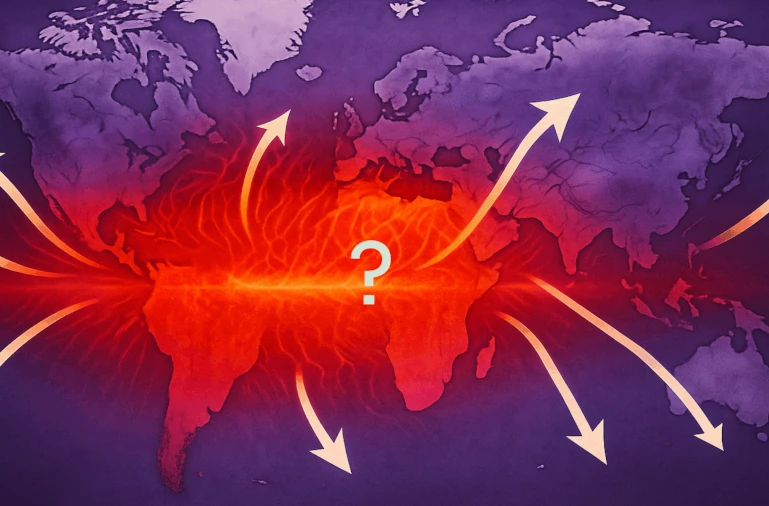
In the next 25 years, the International Organization for Migration estimates that one billion people will be displaced from their homes due to climate-related events. From island nations underwater to inland areas too hot and extreme to sustain life, the individuals and communities in these areas will need somewhere new to live. Where will these people go, and how will this mass migration add further pressure to the stability of nations and the world?
In this episode, Nate is joined by environmental and migration historian, Sunil Amrith, to explore the complex history of human movement – and what it reveals about the looming wave of climate-driven migration. Sunil explains how the historical record shows migration has always been a defining feature of human life, not an exception. Together, they examine projections for future migration trends and the urgent need for acceptance, planning, and infrastructure to support the integration of new communities.
What lessons can we draw from past environmental crises that forced people to move, and how do today’s challenges overlap or differ? How have countries historically responded to large-scale migration, and what long-term impacts did those choices have on their stability and prosperity? Ultimately, how might a more open and welcoming mindset help us face the unprecedented migrations ahead, as well as transform them into opportunities for survival, resilience, and shared thriving?
About Sunil Amrith
Sunil Amrith is the Renu and Anand Dhawan Professor of History at Yale University, with a secondary appointment as Professor at the Yale School of the Environment. He is the current Henry R. Luce Director of the Whitney and Betty MacMillan Center for International and Area Studies at Yale. Sunil’s research focuses on the movements of people and the ecological processes that have connected South and Southeast Asia, and has expanded to encompass global environmental history. He has published in the fields of environmental history, the history of migration, and the history of public health.
Sunil’s most recent book The Burning Earth, an environmental history of the modern world that foregrounds the experiences of the Global South, was named a 2024 “essential read” by The New Yorker, and a “book we love” 2024 by NPR. Additionally, Sunil’s four previous books include Unruly Waters and Crossing the Bay of Bengal: The Furies of Nature and the Fortunes of Migrants.
Images from this episode. All images provided by Sunil Amrith
00:00 – Sunil Amrith, website, books & other works
- Most recent book: The Burning Earth: A History
02:55 – Broad history of human migration, Early human migrations, Timeline of maritime migration and exploration
03:25 – Migration in the Bay of Bengal
03:55 – Monsoon winds in the Bay of Bengal shaped trade, commerce, and migration
04:45 – History of migrational conflict in the Bay of Bengal
05:39 – Wide-boundary perspective
05:42 – “The Birthplace of Humanity”: Olduvai Gorge in the Great Rift Valley
06:10 – Archeological sites in present-day Malaysia
06:40 – Folklore, mythology, and religion role in Bengali migration
07:00 – 3.7% of the global population are international migrants
09:28 – Anti-migrant sentiment is global
10:41 – Migration drivers
11:30 – Migration by coercion: (weaponized migration, human-traffiking, slave trade, etc)
11:43 – Migrations to Malayan rubber plantations
15:55 – Media portrayal of migration
16:16 – “Home” by Warsan Shire
17:10 – Sakhalin Island by Anton Chekhov: quote referenced (Page 4)
20:00 – Personal narratives shape who we are
21:15 – Where agriculture takes root has determined highly populated and sometimes wealthy areas
21:45 – Rice cultivation in China and migration
22:11 – Sea level change since the Last Glacial Maximum
22:45 – Water’s relationship to migration
23:10 – Global heating
24:40 – IPCC: 90% of those displaced by climate change will be displaced domestically
25:10 – Nate’s lecture series in India, Recommendations section of the series
26:20 – Environmental pressures affecting migration
27:40 – Wet-bulb temperature: Areas where temperature will become unbearable as global warming increases (Source study), Effects on precipitation
30:15 – Cost of long-distance migration, Labor migration costs
31:19 – Relationship between migration and class, Seasonal (distress-based) migration
32:29 – Cognitive Dissonance
32:35 – Comparing climate impacts at 1.5°C, 2°C, 3°C and 4°C, Interactive source
32:50 – Climate Change Denial
34:17 – Sunil’s book on the relationship of water and migration Unruly Waters
35:00 – Water’s influence on human settlements, Early human coastal migration
36:05 – Cities “engineered” away from water: Bengaluru, Las Vegas, Dubai, Los Angeles
36:19 – Mike Davis
37:23 – Medieval Climate Anomaly, Little Ice Age and relationship to migration and development of empire
39:17 – Large-scale migration is a common outcome of large-scale conflict
39:50 – Conflict’s contribution to climate change; Global military emissions, Lasting ecological damage, Energy in the armaments industry
40:40 – Peacebuilding, Disarmament
41:30 – Small island states in Pacific under threat from climate change, some islands will have no physical future for this community currently there
41:55 – South Pacific nations, especially New Zealand, policies on “successful migration”
43:00 – Families in U.S. that don’t want to evacuate during natural disasters
43:50 – Game Theory
43:55 – Climate change risks in New Orleans
45:35 – Bangladesh planning for migration, Bangladesh’s climate predictions
46:00 – Reduced deaths in Bangladesh from extreme weather (especially Cyclones)
46:42 – Dhaka launches first-ever Climate Action Plan
47:07 – Sea-level rise effects on agriculture
49:50 – Increasing Muslim population in Europe
50:10 – In-group/Out-group
51:50 – India population trends, China population trends
52:20 – Indic spirit
58:00 – Why migration is threatening and how to alleviate
59:40 – Elites and the Meta-crisis: bunkers, seasteading, space colonization
1:00:20 – Birnam Wood by Eleanor Catton
1:00:50 – Countries open to migration at different points: United States, Australia, Canada
1:02:00 – How to cultivate curiosity and empathy
1:05:35 – Anthropologist Engseng Ho
1:06:20 – Birth rates are decreasing, replacement rate decreasing
- Endocrine disrupting chemicals, TGS Episodes on this topic:
- Martin Scheringer: “The Growing Threat from Chemical Pollution”
- Jeremy Grantham: “The Baby Bust: How The Toxicity Crisis Could Cause the Next Economic Crash”
- Dr. Shanna Swan “Sperm and Our Future”
- Jane Muncke: “Shutting Off The Plastic Tap: A Global Treaty To Regulate Petrochemical Pollution?”
- Jane Muncke: “Perils of Plastic Packaging”
1:06:55 – Japan low birth rates, aging society – migration attitude changing
1:07:30 – Italy’s unfavorable view of immigration but current need for it
1:07:49 – Jeremy Grantham: one of the effects of declining birth rate – brain drain
1:08:23 – Population boom in 19th and 20th accompanied reorganization of humans
1:11:50 – The Metacrisis, Introduction video
1:12:15 – Fending off Nihlism
1:15:40 – Eco-Anxiety, Ecological Grief