

Recorded on: Jun 25, 2025
Description
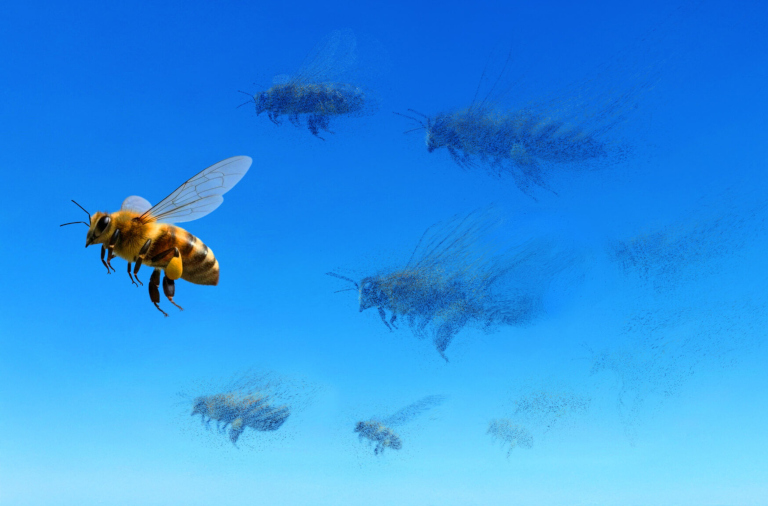
Insects, bugs, creepy-crawlies – these small animals are often considered a nuisance (or worse) by humanity, bringing up an ongoing desire to kill or mitigate these “pests” that plague our backyards, homes, and gardens. But we’re beginning to see that, despite our cultural misconceptions, insects are actually at the foundation of our biosphere, food supply, and nearly every life process on Earth. This makes recent reports of rapidly declining insect populations all the more troubling – but can we recognize the vital importance of insects and reverse the harm we’ve done before it’s too late?
On this episode, Nate is joined by environmental journalist, Oliver Milman, to discuss the alarming decline in insect populations in the past few decades and the far-reaching consequences this has for ecosystem stability, human well-being, and the overall health of the biosphere. From pollination and nutrient cycles to being the base of food webs for countless other animals, the loss of insects has cascading effects beyond what we could imagine. Oliver outlines the human activity that is driving the worst of these trends, including how accelerating global heating is amplifying these ecological pressures.
How would a major collapse of insect populations immediately disrupt our everyday lives — and are we already starting to see those impacts? How do various sectors of human activity, from industrial agriculture to urban development, influence insect health? And ultimately, would supporting thriving insect populations require us to fundamentally rethink our relationship with the creatures with which we share the biosphere?
About Oliver Milman
Oliver Milman is a British journalist and the environment correspondent at The Guardian. His first book, The Insect Crisis, is a devastating account of how a silent collapse in worldwide insect populations is threatening everything from the birds in our skies to the food on our plates. It was published by Atlantic in 2022 and shortlisted for the Wainwright Prize for Conservation Writing.
Show Notes & Links to Learn More
00:00 – Oliver Milman, works, The Insect Crisis
02:54 – 2 billion insects for every human
03:37 – Scientists’ warning to humanity on insect extinctions
03:54 – The U.S. has lost 1/5 of butterfly population since 2000
04:09 – Losing 2% insect biomass per year, Total biomass
04:54 – Percentage of living things that are insects
05:09 – Diversity of flies, Assassin fly and how may species
06:29 – Ecosystem services of insects
07:44 – Neoteny and the evolutionary reasoning behind loving baby mammals
08:04 – Evolutionary relationship to insects, Human Interactions with insects
08:26 – Malaria carried by mosquitos is a leading cause of preventable death
08:34 – Purposes mosquitoes serve
09:14 – White rhino endangerment
09:34 – Pollinators effects on agriculture
10:44 – The Little Things that Run the World by E.O. Wilson
12:24 – 1/3 of food we eat depends on pollinators, the “Chocolate” midge, alfalfa pollinator
14:59 – Decline in insect-eating birds in Europe, in Canada, in the Amazon
16:24 – Insect population dynamics
17:04 – Method on counting insects
17:24 – Thomas Crowther, TGS Episode
18:24 – Climate change and malaria mosquitoes
18:40 – Cockroach resiliency
19:04 – 1 in 4 native bee species endangered in U.S., Monarch butterfly migration changes
20:49 – Honeybees being trucked around U.S. to pollinate fields
23:24 – Planting native milkweed for monarchs, Benefits of planting native plants for insects
23:39 – UK’s and Germany’s responses to insect issues
24:19 – Pollinator populations decreasing and soils degrading, human populations increasing
24:54 – Global grassland degradation, Land use for agriculture, Climate change’s effect on the seasons
25:59 – Light pollution effects on Fireflies and Moths
27:44 – Bees during the winter
31:24 – Neonicotinoids
32:04 – Germany insect population study, Puerto Rico insect population study
33:14 – Insects populations that are thriving: cockroaches, mosquitos, ticks
34:04 – Lone star tick can cause allergy to meat
35:04 – Second-, third-, nth order effects
35:44 – Crop yields dropping
36:14 – Drones as pollinators, Black Mirror, How long bees have been around
37:13 – Harvard and a Dutch university building robotic bees
37:29 – Apple orchard drone pollination demo
42:54 – Being surrounded by undisturbed nature is good for us
47:14 – Rod Schoonover, TGS Episode
47:59 – U.S. artificially keeps up the honey bee populations
49:59 – California almond industry, Bee bandits
51:34 – Research on 5G effects on insects
52:19 – Germany agricultural practices to help insects
52:59 – Wild flower patches in Detroit, MI and the Netherlands
53:12 – New York City Green Roofs
53:54 – Higher diversity of certain insects in urban areas than in rural areas
54:44 – Leaving fisheries alone and fish populations recover
56:46 – EPA Seeks to Bring Back Twice-Banned Pesticide
57:34 – U.S. Policy addressing light pollution
57:47 – No Mow May
1:00:33 – Benefits of not raking leaves
1:02:04 – Evolutionary psychology of entomophobia (cats and cucumbers)
1:03:49 – Neurolinguistic programming therapy
1:04:39 – Shifting baselines
1:06:58 – Honeybees can understand 0 and addition/subtraction, can detect landmines, display altruistic behavior, can play “soccer”
1:08:04 – Cockroaches can live for some time without their head
1:08:29 – Dragonfly flight
1:08:49 – U.S. Military insect-inspired robots, Insect-inspired AI design
1:09:24 – Nick Haddad, TGS Episode