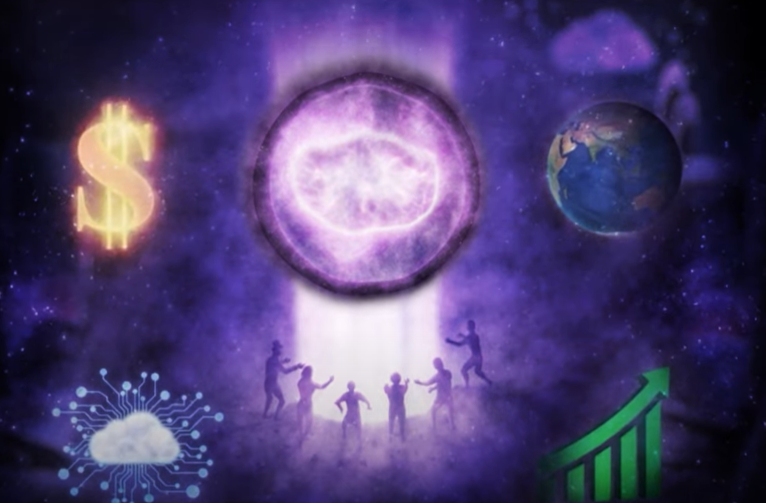
In a world grappling with converging crises, we often look outward – for new tech, new markets, new distractions. But the deeper issue lies within: our relationship with energy, nature, and each other. What if we step back far enough to see human civilization itself as an organism that is growing without a plan?
In this week’s Frankly — adapted from a recent TED talk like presentation (called Ignite) — Nate outlines how humanity is part of a global economic superorganism, driven by abundant energy and the emergent properties of billions of humans working towards the same goal. Rather than focusing on surface-level solutions, Nate invites us to confront the underlying dynamics of consumption and profit. It’s a perspective that defies soundbite culture — requiring not a slogan, but a deeper reckoning with how the world actually works.
These are not quick-fix questions, but the kinds that demand slow thinking in a world hooked on speed. What if infinite growth on a finite planet isn’t just unrealistic – but the root of our unfolding crisis? In a system designed for more, how do we begin to value enough? And at this civilizational crossroads, what will you choose to nurture: power, or life?
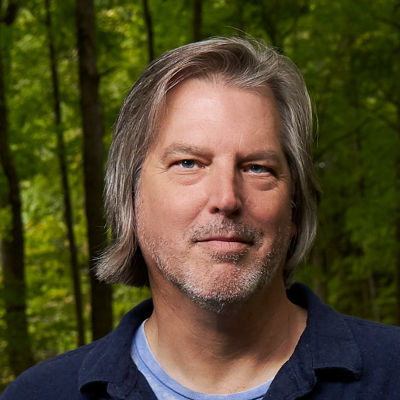
Nate Hagens is the Director of The Institute for the Study of Energy & Our Future (ISEOF) an organization focused on educating and preparing society for the coming cultural transition. Allied with leading ecologists, energy experts, politicians and systems thinkers ISEOF assembles road-maps and off-ramps for how human societies can adapt to lower throughput lifestyles.
Nate holds a Masters Degree in Finance with Honors from the University of Chicago and a Ph.D. in Natural Resources from the University of Vermont. He teaches an Honors course, Reality 101, at the University of Minnesota.
Related Articles
'SELECT SQL_CALC_FOUND_ROWS wp_posts.ID
FROM wp_posts LEFT JOIN wp_term_relationships ON (wp_posts.ID = wp_term_relationships.object_id)
WHERE 1=1 AND wp_posts.ID NOT IN (3513366) AND (
wp_term_relationships.term_taxonomy_id IN (1,2,3,5,8995)
) AND wp_posts.post_type = \'post\' AND ((wp_posts.post_status = \'publish\'))
GROUP BY wp_posts.ID
ORDER BY wp_posts.post_date DESC
LIMIT 0, 3'
What does a livable future look like 100 years from now? If we unlocked unlimited green energy, what would we actually do with it? And are our dreams of a renewable-energy utopia sometimes just as delusional as the fossil-fueled ‘drill baby drill’ mentality?
I do think we need this feast to return to its roots, as a potlatch, a bonding redistribution of wealth and full bellies, a rapprochement across the great divides, and a coming together in joy to feed each other. We need something that draws us into community, that builds ties, that creates relationship and memories.
Rather than being a religion, animism is a mindset that had common purchase around the globe prior to modern times. Not only is it important to appreciate how we used to be when the planet’s ecological relationships were more “normal,” but it offers a worthy alternative to dualism that has much overlap with an astrophysical perspective.