I sat down for an interview with Scott Johnson of the Institute from my home in rural Ireland; we chatted about the Irish elders I’ve talked to, and how their close communities and traditional culture allowed them to survive crises like the bank strikes of the 1960s and 70s.
The Low Technology Institute, in Wisconsin, USA, researches ways of adapting to the difficult future we see ahead — they do a blog, podcast, and videos, and offer regular workshops and memberships, and they’re well worth your time
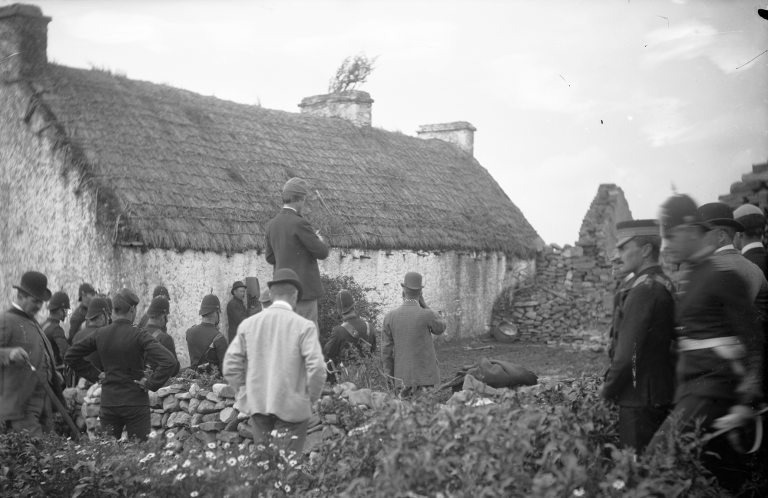
Top photo: Eviction scene in Ireland (ca 1888) by Robert French. The Lawrence Photograph Collection via Wikimedia Commons https://commons.wikimedia.org/wiki/File:Eviction_scene,_Ireland_(23426826123).jpg
Former newspaper editor Brian Kaller wrote his first magazine cover story on peak oil in 2004, and since then has written for the American Conservative, the Dallas Morning News, Front Porch Republic, Big Questions Online and Low-Tech Magazine. In 2005 he and his family moved to rural Ireland, where he speaks to schools and churches, and writes a weekly column for the local newspaper.
Tags: Ireland, traditional communities
Related Articles
'SELECT SQL_CALC_FOUND_ROWS wp_posts.ID
FROM wp_posts LEFT JOIN wp_term_relationships ON (wp_posts.ID = wp_term_relationships.object_id)
WHERE 1=1 AND wp_posts.ID NOT IN (3492035) AND (
wp_term_relationships.term_taxonomy_id IN (5,8988,9001)
) AND wp_posts.post_type = \'post\' AND ((wp_posts.post_status = \'publish\'))
GROUP BY wp_posts.ID
ORDER BY wp_posts.post_date DESC
LIMIT 0, 3'
What does a livable future look like 100 years from now? If we unlocked unlimited green energy, what would we actually do with it? And are our dreams of a renewable-energy utopia sometimes just as delusional as the fossil-fueled ‘drill baby drill’ mentality?
I do think we need this feast to return to its roots, as a potlatch, a bonding redistribution of wealth and full bellies, a rapprochement across the great divides, and a coming together in joy to feed each other. We need something that draws us into community, that builds ties, that creates relationship and memories.
Rather than being a religion, animism is a mindset that had common purchase around the globe prior to modern times. Not only is it important to appreciate how we used to be when the planet’s ecological relationships were more “normal,” but it offers a worthy alternative to dualism that has much overlap with an astrophysical perspective.