

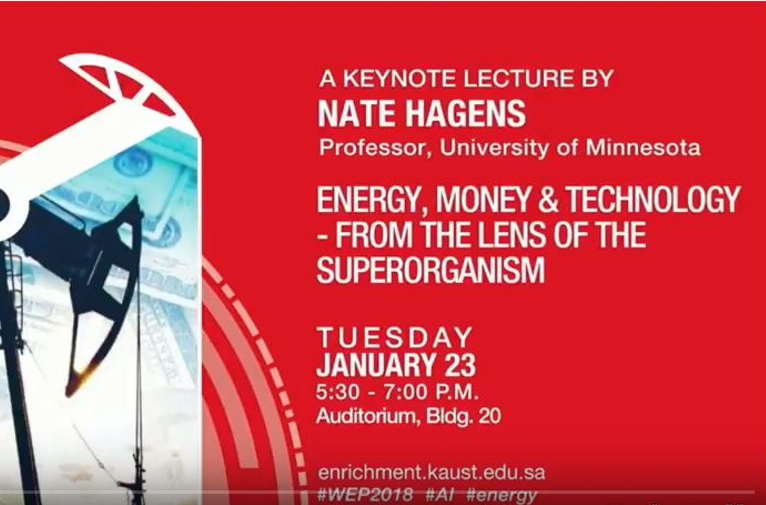
During Nate Hagens’ #WEP2018 keynote, he discussed how all of our lives will be influenced by how we react to the coming era of harder to extract and more costly fossil fuels that will be combined with cleaner but more stochastic energy types.

Related Articles
'SELECT SQL_CALC_FOUND_ROWS wp_posts.ID
FROM wp_posts LEFT JOIN wp_term_relationships ON (wp_posts.ID = wp_term_relationships.object_id)
WHERE 1=1 AND wp_posts.ID NOT IN (3470257) AND (
wp_term_relationships.term_taxonomy_id IN (1,8990,8995)
) AND wp_posts.post_type = \'post\' AND ((wp_posts.post_status = \'publish\'))
GROUP BY wp_posts.ID
ORDER BY wp_posts.post_date DESC
LIMIT 0, 3'
Time Machine 2126 (Part 1): Has Green Energy Saved Us Yet?
What does a livable future look like 100 years from now? If we unlocked unlimited green energy, what would we actually do with it? And are our dreams of a renewable-energy utopia sometimes just as delusional as the fossil-fueled ‘drill baby drill’ mentality?
December 8, 2025

Crazy Town: Episode 115. Toasting Bread Is WAY Harder Than You Think: The Challenges of a Renewable Energy Future
If we unlocked unlimited green energy, what would we actually do with it? And are our dreams of a renewable-energy utopia sometimes just as delusional as the old fossil-fueled, drill-baby-drill mentality? Alex Leff of the Human Nature Odyssey podcast hosts this special Crazy Town highlights compilation.
December 3, 2025

Oil, AI, Electrification and the Next Big Crash
So, what have we got? A global economy staggering amongst geopolitical tension, a bubble to beat all bubbles, and the twin shocks of a (potentially permanent) oil price crash and the EV subsidies ending — and all with the backdrop of worsening climate change driving up inflation and inflicting constant disasters.
November 26, 2025