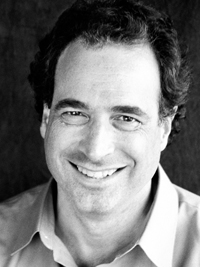
Michael Shuman presented to a crowd about local investing and ways to create wealth in a community. His talk on October 10 was the kickoff event for Vermont’s New Economy Week 2013.

By Michael Shuman, originally published by Donella Meadows Institute
October 21, 2013
Michael Shuman presented to a crowd about local investing and ways to create wealth in a community. His talk on October 10 was the kickoff event for Vermont’s New Economy Week 2013.
Michael Shuman is director of research for Cutting Edge Capital, director of research and economic development at the Business Alliance for Local Living Economies (BALLE), and a Fellow of Post Carbon Institute. He holds an AB with distinction in economics and international relations from Stanford University and a JD from Stanford Law School. He has led community-based economic-development efforts across the country and has authored or edited seven previous books, including The Small Mart Revolution: How Local Businesses Are Beating the Global Competition (2006) and Going Local: Creating Self-Reliant Communities in the Global Age (1998).
In recent years, Michael has led community-based economic-development efforts in St. Lawrence County (NY), Hudson Valley (NY), Katahdin Region (ME), Martha’s Vineyard (MA), and Carbondale (CO), and served as a senior editor for the recently published Encyclopedia of Community. He has given an average of more than one invited talk per week for 25 years throughout the United States and the world.
Request an interview
Request as a speaker
View Michael’s speaking terms.
Tags: local economic development, local investing, relocalization
By Bart Hawkins Kreps, An Outside Chance
Why is it so difficult to find a job or to buy products that align with our values? Why is it difficult to even know whether our personal choices might have effects in the right direction?
December 2, 2025
By Beth DaPonte, Common Dreams
The short, natural experiment we all witnessed reinforces that SNAP is the nation’s first line of defense against hunger and food insecurity and food pantries can only be a secondary and supplemental source of food. Food pantries and food banks cannot substitute for a robust, reliable, government-funded food safety net.
November 26, 2025
By Hayden Dahmm, Resilience.org
The proposal for Degrowth calls for an intentional downscaling of the global economy to achieve both ecological sustainability and social justice. A degrowth transition would help ensure that ecological practices actually displace destructive ones, and that the savings from efficiency measures are truly saved.
November 26, 2025