

Click on the headline (link) for the full text.
Many more articles are available through the Energy Bulletin homepage
Transition communities gear up for society’s collapse with a shovel and a smile
Alastair Bland, North Bay Bohemian
Cheer Up, It’s Going to Get Worse
—
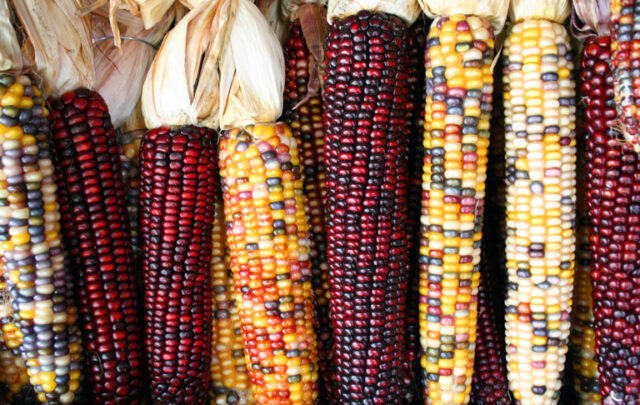
Three years ago, David Fridley purchased two and a half acres of land in rural Sonoma County. He planted drought-resistant blue Zuni corn, fruit trees and basic vegetables while leaving a full acre of extant forest for firewood collection. Today, Fridley and several friends and family subsist almost entirely off this small plot of land, with the surplus going to public charity.
But Fridley is hardly a homegrown hippie who spends his leisure time gardening. He spent 12 years consulting for the oil industry in Asia. He is now a staff scientist at Lawrence Berkeley National Laboratory and a fellow of the Post Carbon Institute in Sebastopol, where members discuss the problems inherent to fossil-fuel dependency.
Fridley has his doubts about renewable energies, and he has grave doubts about the future of crude oil. In fact, he believes to a certainty that society is literally running out of gas and that, perhaps within years, the trucks will stop rolling into Safeway and the only reliable food available will be that grown in our backyards.
Fridley, like a few other thinkers, activists and pessimists, could talk all night about “peak oil.” This catch phrase describes a scenario, perhaps already unfurling, in which the easy days of oil-based society are over, a scenario in which global oil production has peaked and in which every barrel of crude oil drawn from the earth from that point forth is more difficult to extract than the barrel before it. According to peak oil theory, the time is approaching when the effort and cost of extraction will no longer be worth the oil itself, leaving us without the fuel to power our transportation, factories, farms, society and the very essence of our oil-dependent lives. Fridley believes the change will be very unpleasant for many people.
“If you are a typical American and have expectations of increasing income, cheap food, nondiscretionary spending, leisure time and vacations in Hawaii, then the change we expect soon could be what you would consider ‘doom,'” he says soberly, “because your life is going to fall apart.”
(17 June 2009)
Post Carbon Fellow David Fridley and Post Carbon director Asher Miller were interviewed for this article. -BA
Permaculture for Humanity(video)
Peak Moment
 The future is abundant, asserts permaculture designer Larry Santoyo. His vision of living in the present provides a wonderful antidote to fear about uncertain futures. People need to rediscover that we’re part of the ecosystem, and apply permaculture design principles to the many problems we face. Larry teaches sustainable permaculture design as a discovery of the world around us. He notes that trying to be self-sufficient is really anti-permaculture. Instead, we need to develop self-reliance skills. Then as we find others in our communities to interact with, everybody gets to play!
(19 June 2009)
WeCommune: Tech Support for Communes
Julia Levitt, WorldChanging
Post-ownership living may be closer than we think. We see the evidence all around us, in the form of innovations from community kitchens to emerging mobility solutions. So, if people are recognizing the practical potential in social solutions, why aren’t even more models for collaboration, sharing and product-service systems thriving? According to architect Stephanie Smith, spurring the movement may be a simple matter of providing the tech support.
This week Smith, who heads WeCommune, plans to launch the first software platform designed specifically for, well, communing (if you visit, you may get a splash page while they transition). The platform’s services will allow groups of three or more people to self-organize a “commune” defined by a shared interest or shared zip code, and will provide tools for communicating, organizing and managing projects, and sharing resources.
What is commune-support software?
WeCommune is a networking platform, outfitted with commune-specific project management applications that make it much different from a social networking tool.
(16 June 2009)
The promise of the future: Voided by our cleverness (Transition in Salem, Oregon)
Walker, LOVESalem
Since time immemorial, the promise of the future has always been that, overall, on a global scale, each generation will be better off than the prior ones. Humans are clever, and they share what they have learned with other humans, so even young humans can access the hard-won knowledge and experience of many generations of prior learning. Moreover, our lives are short but material goods last a long time — meaning that the wealth of the ages slowly builds up and people enjoy the results of prior generations’ efforts that way too.
Earth, the only habitable planet known, is perfectly suited to support human life in relative ease and comfort. Every day, unfathomable riches of solar energy arrive, for free. Reserves of solar energy, concentrated and distilled over millions and millions of years were provided under the ground, for free. Plants and animals in symbiotic relationship maintain the atmosphere at just the right level of oxygen. If used judiciously, those solar energy reserves (known as fossil fuels) can provide all the energy needed to provide an abundance of comfort and decent livelihood for all people.
But alas! Humans are clever, rather than wise.
As a result, we have voided the promise of the future.
Because of the way we use energy, the future for many generations will be much worse than the present.
… But we can stop making it worse. But it would require living as if we owed something to the future, rather than only to ourselves. So, while there is little cause for hope, there is something we can do: Transition. Not a guaranteed solution or even a “solution” at all — but a way of adapting to our predicament and learning to live so that we don’t leave our children an even more limited and difficult future life.
Here in Salem, a small group (the Salem Transition Initiative for Relocalization) has begun to meet to organize the necessary transition to a more local, low-energy, low-emissions future, as part of a global network of Transition Towns that is growing every day.
(19 June 2009)
Ecocities Emerging – June issue
Kirstin Miller and Richard Register, Ecocities Emerging
This edition of Ecocities Emerging is dedicated in memory of cosmologist and Earth historian Thomas Berry, whothomas.berry.jpg passed away on June 1st at Wellspring home in Greensboro, North Carolina.
Over his 94 years as a historian of the Earth and its evolutionary processes, Thomas Berry contributed many valuable insights and observations to help guide the human perspective. Perhaps not one of his more poetic quotes, but the fulcrum on which the fate of humanity, nature and evolution itself teeters is as follows: “Nature’s economy is primary, human economy derivative.”
Described in Newsweek magazine in 1989 as “the most provocative figure among the new breed of eco-theologians,” Berry was among the first to say the earth crisis is fundamentally a spiritual crisis. He believed the only way to effectively function as individuals and as a species is to understand the history and functioning of our planet and of the wide universe itself, like sailors learning about their ship and the vast ocean on which it sails. “It takes a universe to make a child,” he said, adding that he was “trying to establish a functional cosmology, not a theology.”
We acknowledge Thomas Berry’s significant contributions to the intellectual capital of our species and thank him for enriching and warming our lives and the lives of thousands of others. We will miss him very much.
Mr. Berry’s vision of the Ecozoic Era — an emerging epoch when humanity lives in a mutually enriching relationship with the larger community of life on Earth — was, is, and will continue to be the inspiration for the Ecocities Emerging initiative.
Other articles:
Urban Village, Shenzhen Style
Beyond Environmentalism vs Smart Growth at San Francisco Bay
Ecocity World Summit 2009 – Istanbul Turkey, December 13-15
Landfill could be turned into eco-village in Hong Kong
Nations may form global CO2 market without U.N. deal
Paolo Soleri 90th Birthday Celebration at Arcosanti
(18 June 2009)
Report says peak oil could cause food shortages in S.F.
Alastair Bland, San Francisco Weekly
In May, an obscure city advisory group released the results of a 15-month study of San Francisco’s vulnerabilities to peak oil, a scenario that assumes the global supply of oil will run thin in the near future and that the world could go the way of Mad Max. Produced by the now-disbanded Peak Oil Preparedness Task Force, seven volunteers appointed in part by Supervisor Ross Mirkarimi in late 2007, the 120-page report warns that San Francisco is looking at a grim future if public policymakers and city residents don’t start preparing for the post-oil apocalypse right away.
Jason Mark, a local author and urban farmer who sat on the task force, says serious food shortages could be a reality. He recommended in the report that residents be allowed to graze goats in their yards, keep more than four chickens per property, and raise and eat their own rabbits and hogs as supplemental protein sources. He says these tactics — currently prohibited by the health department — would help alleviate pressure on outlying Bay Area farmlands while building agricultural self-sufficiency within the limits of San Francisco. He would also like public golf courses to be converted into productive urban farmland and have the city plant fruit and nut trees along sidewalks
(16 June 2009)