

'SELECT SQL_CALC_FOUND_ROWS wp_posts.ID
FROM wp_posts INNER JOIN wp_postmeta ON ( wp_posts.ID = wp_postmeta.post_id )
WHERE 1=1 AND (
wp_posts.ID NOT IN (
SELECT object_id
FROM wp_term_relationships
WHERE term_taxonomy_id IN (47485,47486)
)
) AND (
(
( wp_postmeta.meta_key = \'the_author\' AND wp_postmeta.meta_value = \'3467356\' )
OR
( wp_postmeta.meta_key = \'secondary_author\' AND wp_postmeta.meta_value LIKE \'{994c7246234a50cf87019162e144ca7b7851a6ea365c1e63701b2929231f3819}\\"3467356\\"{994c7246234a50cf87019162e144ca7b7851a6ea365c1e63701b2929231f3819}\' )
)
) AND wp_posts.post_type = \'post\' AND ((wp_posts.post_status = \'publish\'))
GROUP BY wp_posts.ID
ORDER BY wp_posts.post_date DESC
LIMIT 0, 6'
Patterns of Commoning: On Openness, Commons & Unconditional Basic Work
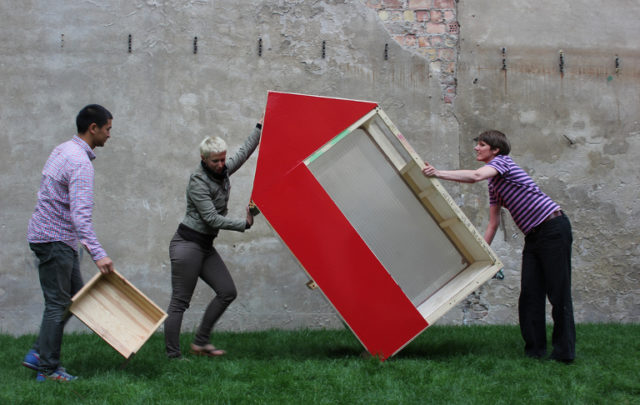
Van Bo Le-Mentzel has invented all kinds of useful things, among others, do-it-yourself blueprints for furniture and tiny houses. He has become known for social DIY projects such as “Hartz IV1 Möbel,” the Unreal Estate House,2 and the One-Square-Meter House.3 He is now transferring the concept of these projects – unconditional freedom to use something for one’s own purposes – to his own life and that of his family with a campaign called #dScholarship that he started in 2014.
July 5, 2017