

Sue Everett is an ecologist and land management adviser. She is a regular contributor to British Wildlife magazine, co-founder of two national wild-plant charities and helps farmers and landowners restore nature-rich habitats on their land.
'SELECT SQL_CALC_FOUND_ROWS wp_posts.ID
FROM wp_posts INNER JOIN wp_postmeta ON ( wp_posts.ID = wp_postmeta.post_id )
WHERE 1=1 AND (
wp_posts.ID NOT IN (
SELECT object_id
FROM wp_term_relationships
WHERE term_taxonomy_id IN (47485,47486)
)
) AND (
(
( wp_postmeta.meta_key = \'the_author\' AND wp_postmeta.meta_value = \'3480250\' )
OR
( wp_postmeta.meta_key = \'secondary_author\' AND wp_postmeta.meta_value LIKE \'{4ecd850edd3a50b10e74889211231531b2cfb500cc930234b098829dfd16ac43}\\"3480250\\"{4ecd850edd3a50b10e74889211231531b2cfb500cc930234b098829dfd16ac43}\' )
)
) AND wp_posts.post_type = \'post\' AND ((wp_posts.post_status = \'publish\'))
GROUP BY wp_posts.ID
ORDER BY wp_posts.post_date DESC
LIMIT 0, 6'
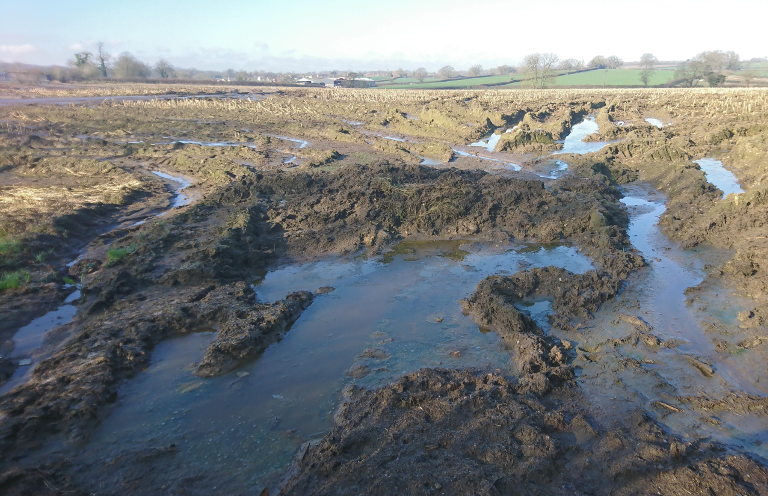
A Message in the Floods
Our land has experienced centuries of woodland clearance, decades of overgrazing and burning upland heaths and bogs, and relatively recent ‘reclamation’ (for intensive farming) of heathy hillsides, scrubby banks, old pastures and floodplain meadows. On heavy clay soils, and where wetlands used to be, land drainage, river canalisation and dredging have enabled farmers to cultivate land where cultivation was considered impossible not that long ago.
February 26, 2020