

Dr Carl-Friedrich Schleussner is head of climate science and impacts, and a scientific advisor to Climate Analytics.
'SELECT SQL_CALC_FOUND_ROWS wp_posts.ID
FROM wp_posts INNER JOIN wp_postmeta ON ( wp_posts.ID = wp_postmeta.post_id )
WHERE 1=1 AND (
wp_posts.ID NOT IN (
SELECT object_id
FROM wp_term_relationships
WHERE term_taxonomy_id IN (47485,47486)
)
) AND (
(
( wp_postmeta.meta_key = \'the_author\' AND wp_postmeta.meta_value = \'3467381\' )
OR
( wp_postmeta.meta_key = \'secondary_author\' AND wp_postmeta.meta_value LIKE \'{968ab6c1dd43c1aedcb9f45db431ecbfacb9f32fb8cdf616f3c330bbd9947e61}\\"3467381\\"{968ab6c1dd43c1aedcb9f45db431ecbfacb9f32fb8cdf616f3c330bbd9947e61}\' )
)
) AND wp_posts.post_type = \'post\' AND ((wp_posts.post_status = \'publish\'))
GROUP BY wp_posts.ID
ORDER BY wp_posts.post_date DESC
LIMIT 0, 6'
Half a Degree could Make a World of Difference
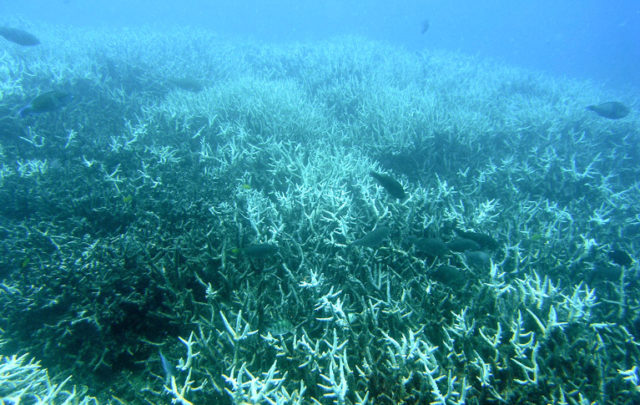
Observational records show us that half a degree of warming in the recent past has brought significant increases in extreme weather events, which provides another line of evidence for what an additional 0.5C of warming could entail. Differentiating climate impacts between 1.5C and 2C warming above pre-industrial levels has been a hot topic in climate science since the adoption of the 1.5C long-term temperature limit in the Paris Agreement and much research is underway for inclusion in the IPCC special report on impacts at 1.5C warming.
July 7, 2017