

Ashish Kothari is the founder of Kalpavriksh, an Indian non profit organisation working on environmental and social issues at local, national and global levels. He was trained at the Indian Institute of Public Administration and coordinated India’s National Biodiversity Strategy and Action Plan. He served on boards of Greenpeace International. He is part of the coordination team of Vikalp Sangam, the Global Tapestry of Alternatives and Radical Ecological Democracy. He is the (co-)author of several books including Churning the Earth (2012) and a co-editor of “Pluriverse: A Post-Development Dictionary” (2019).
'SELECT SQL_CALC_FOUND_ROWS wp_posts.ID
FROM wp_posts INNER JOIN wp_postmeta ON ( wp_posts.ID = wp_postmeta.post_id )
WHERE 1=1 AND (
wp_posts.ID NOT IN (
SELECT object_id
FROM wp_term_relationships
WHERE term_taxonomy_id IN (47485,47486)
)
) AND (
(
( wp_postmeta.meta_key = \'the_author\' AND wp_postmeta.meta_value = \'2100739\' )
OR
( wp_postmeta.meta_key = \'secondary_author\' AND wp_postmeta.meta_value LIKE \'{f1d3613a2949bcb37ce63296fe536948efc81c3b9fef61d6e2dc6b0d69d4d4e0}\\"2100739\\"{f1d3613a2949bcb37ce63296fe536948efc81c3b9fef61d6e2dc6b0d69d4d4e0}\' )
)
) AND wp_posts.post_type = \'post\' AND ((wp_posts.post_status = \'publish\'))
GROUP BY wp_posts.ID
ORDER BY wp_posts.post_date DESC
LIMIT 0, 6'
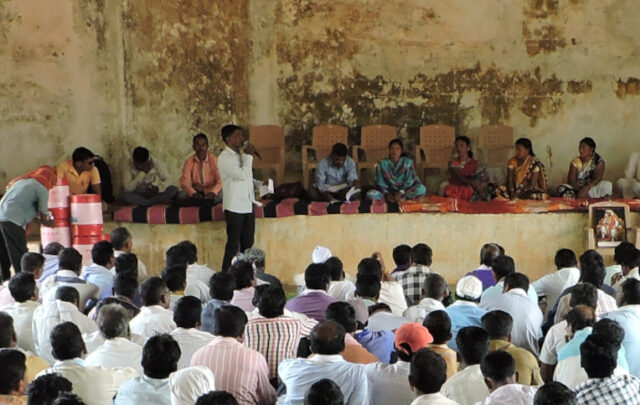
More than the global North, communities from Global South know what democracy is
As the Kurdish activist and ideologue Abdullah Ocalan, Mahatma Gandhi, many strands of the feminist and ecological movements, and Indigenous peoples have articulated in different forms, the nation-state disables (rather than enabling) true freedom – one in which every person and community is empowered to take decisions, in tune with nature.
June 17, 2025
Nation-states are destroying the world. Could ‘bioregions’ be the answer?
Now, from the war-torn border regions of South Asia to the Amazon rainforest, people are questioning whether sustainability can ever be achieved through the framework of nation-states. They are turning to other ways of organising society based on Indigenous worldviews and practices that respect all humans and the rest of nature.
May 16, 2024

A Flowering of Radical Change
The Flower of Transformation has five petals: radical political democracy, radical economic democracy, social justice, cultural (and knowledge) diversity, and ecological wisdom.
November 22, 2022

Amitav Ghosh: The Nutmeg’s Curse
As we’ve seen, the few environmental movements that have succeeded in the long run are almost all built around certain ideas of the relationship between humans and certain spaces.
January 31, 2022
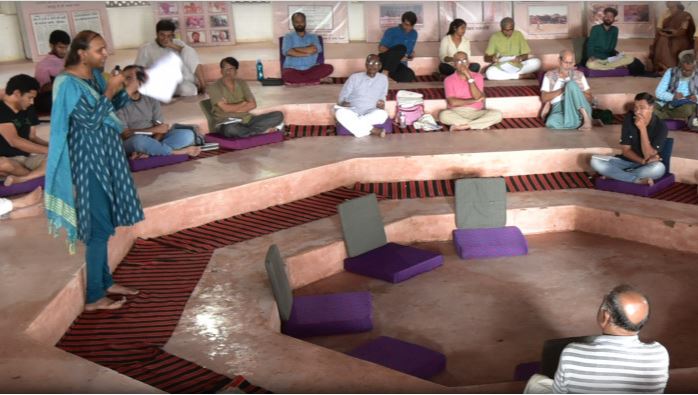
The promise and perils of democracy
Lets go back to basics. Democracy = demos + cracy, rule of (or by) the people. The power to take decisions is inherent to each one of us, it is part of being human.
September 21, 2021

A New Future for Conservation
We argue for an alternative approach to conservation policy moving forward, one that seeks to move beyond both protected areas and economic valuation. Our proposal is less concerned with the targets specified by the current post-2020 framework, and more focused on the means and processes by which these are achieved.
August 12, 2020