

Postdoctoral Fellow and Lecturer in Geology, University of Vermont
'SELECT SQL_CALC_FOUND_ROWS wp_posts.ID
FROM wp_posts INNER JOIN wp_postmeta ON ( wp_posts.ID = wp_postmeta.post_id )
WHERE 1=1 AND (
wp_posts.ID NOT IN (
SELECT object_id
FROM wp_term_relationships
WHERE term_taxonomy_id IN (47485,47486)
)
) AND (
(
( wp_postmeta.meta_key = \'the_author\' AND wp_postmeta.meta_value = \'3485927\' )
OR
( wp_postmeta.meta_key = \'secondary_author\' AND wp_postmeta.meta_value LIKE \'{5999935bfa5701552f41e1c337d44d015b097bb7c5b6575fb4492c39ffe3281b}\\"3485927\\"{5999935bfa5701552f41e1c337d44d015b097bb7c5b6575fb4492c39ffe3281b}\' )
)
) AND wp_posts.post_type = \'post\' AND ((wp_posts.post_status = \'publish\'))
GROUP BY wp_posts.ID
ORDER BY wp_posts.post_date DESC
LIMIT 0, 6'
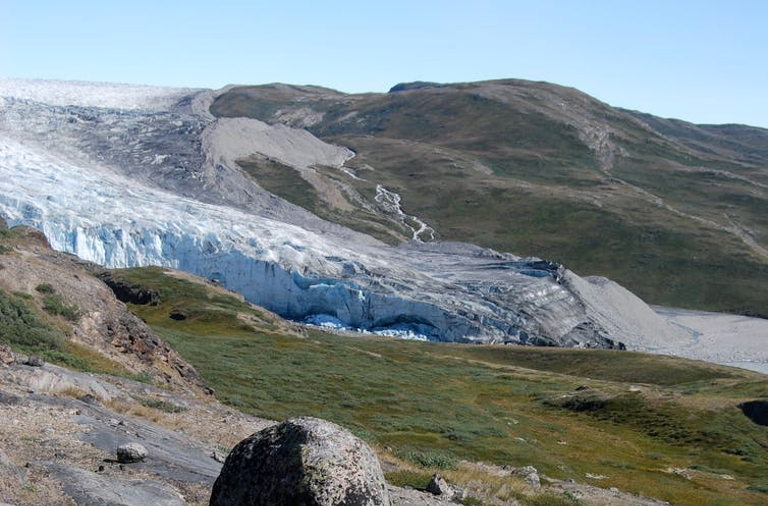
Ancient leaves preserved under a mile of Greenland’s ice – and lost in a freezer for years – hold lessons about climate change
Losing the Greenland ice sheet would be catastrophic to humanity today. The melted ice would raise sea level by more than 20 feet. That would redraw coastlines worldwide.
March 16, 2021