

'SELECT SQL_CALC_FOUND_ROWS wp_posts.ID
FROM wp_posts INNER JOIN wp_postmeta ON ( wp_posts.ID = wp_postmeta.post_id )
WHERE 1=1 AND (
wp_posts.ID NOT IN (
SELECT object_id
FROM wp_term_relationships
WHERE term_taxonomy_id IN (47485,47486)
)
) AND (
(
( wp_postmeta.meta_key = \'the_author\' AND wp_postmeta.meta_value = \'3468735\' )
OR
( wp_postmeta.meta_key = \'secondary_author\' AND wp_postmeta.meta_value LIKE \'{2988fbe59147685b35661a88e44735d4b4e51a0d1ea1d2490b873a63d700cd87}\\"3468735\\"{2988fbe59147685b35661a88e44735d4b4e51a0d1ea1d2490b873a63d700cd87}\' )
)
) AND wp_posts.post_type = \'post\' AND ((wp_posts.post_status = \'publish\'))
GROUP BY wp_posts.ID
ORDER BY wp_posts.post_date DESC
LIMIT 0, 6'
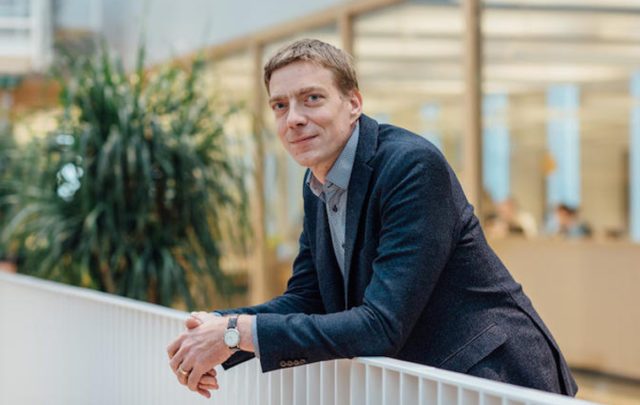
Want to Change the System? ‘Become the System’
We live in turbulent times: many certainties are disappearing and changes are difficult to understand. Can transition management help us to explain where the world is heading? Derk Loorbach, director of the Dutch Research Institute for Transitions (DRIFT) at the Erasmus University of Rotterdam, talks about the mechanisms, risks, and trends necessitated by transitioning towards a more sustainable world. “If you want to change the system, you should eventually be willing to become the system,” he says.
October 5, 2017