

Click on the headline (link) for the full text.
Many more articles are available through the Energy Bulletin homepage
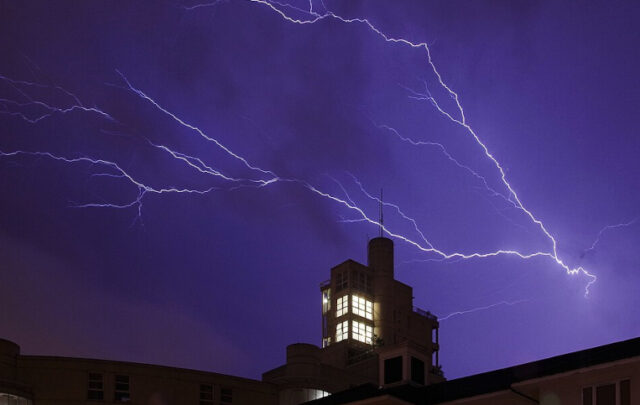
Power failures hit Europe
Associated Press via NY Times
BERLIN – Power failures left about 10 million people in the dark across Europe on Saturday night, and a German electric company said Sunday that they could have been caused by a chain reaction after it shut down a transmission line over a river to let a ship pass.
The blackouts briefly halted trains in Germany and trapped dozens of people in elevators in France and Italy. Austria, Belgium and Spain were also affected, though power to most regions was quickly restored. No injuries were reported.
The power failures renewed previous concerns about the reliability of Europe’s interconnected power grids.
The German electric company, E.On, said the problems had begun in northwestern Germany, where its network became overloaded.
(6 Nov 2006)
Smart Metering and Smarter Metering – Part II
Stoneleigh, The Oil Drum: Canada
Imagine for a moment that we bought food in the way we currently buy electricity. We might order from a supply list with no prices marked and have whatever we fancied delivered to our door whenever we pleased. A single, un-itemized bill would arrive in the mail once every couple of months covering all the food ordered and delivered during the billing period. How would our food bills probably compare to what they are currently? How would we go about reducing our food bill in order to save money when we know nothing about the cost of each act of consumption? If the ‘Ministry of Food Supply’ were worried about the amount of food available, reliance on expensive imports or whether the delivery system might not be up to the task, what could they do to encourage a ‘food conservation culture’?
What is missing from our hypothetical scenario is real-time price feedback, which would allow consumers to take responsibility for their own consumption. Its absence makes the task of trying to reduce demand much more difficult, both for consumers and for those trying to manage the supply. If we are ever to introduce a conservation culture, the tradition of passive consumption must first be challenged.
A Tradition of Passive Consumption
The traditional AC system has evolved as a natural responsibility of government for reasons of scale and because the stability of such a system requires central control in real time. Its history as a public service has led to political pressure to keep prices low overall and uniform, independent of the cost of supply despite the fact that the cost of supply may vary considerably at different times and in different locations. The resulting low tariffs – sometimes lower than the cost of production – and extensive cross-subsidies have muddied the waters and encouraged passive consumption.
Passive consumers do not give a second thought to the act of consumption, let alone the mammoth tasks of production and delivery. They take supply completely for granted.
(2 Nov 2006)
Previous article in series: How Smart is Ontario’s Smart Metering Plan? Part I.
Flat screen televisions ‘will add to global warming’
Ben Russell, The Independent
The domestic boom in flatscreen televisions could pump hundreds of thousands of tonnes of extra carbon into the atmosphere each, hampering Britain’s attempts to cut emissions.
Research by the Liberal Democrats suggested yesterday that the hi-tech televisions would increase emissions by 700,000 tonnes a year by 2010 – a 70 per cent increase from Britain’s 63 million television sets. The figures come amid widespread calls for changes in consumer behaviour in the wake of the Stern report on the dangers of global warming.
…Sales of flat screen televisions have boomed as prices have fallen. But research by the Government’s Market Transformation Programme (MTP), which tracks future trends, shows that current flat screen televisions larger than 24 inches use more than three times the electricity of their conventional counterparts.
…Martin Williams, climate campaigner for Friends of the Earth, said power consumption varied between television sets, with some flat screen televisions more efficient than the equivalent older models. But he warned that the slim sets could encourage people to upgrade to larger screens.
(1 Nov 2006)